BIOSTEC Conference Co-Chairs
|
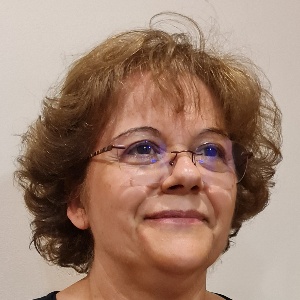
Ana Fred
Instituto de Telecomunicações and Instituto Superior Técnico (University of Lisbon)
Portugal
|
Short Bio
Ana Fred received the M.S. and Ph.D. degrees in Electrical and Computer Engineering, in 1989 and 1994, respectively, both from Instituto Superior Técnico (IST), Technical University of Lisbon, Portugal. She is a Faculty Member of IST since 1986, where she has been a professor with the Department of Electrical and Computer Engineering, and more recently with the Department of Biomedical Engineering. She is a researcher at the Pattern and Image Analysis Group of the Instituto de Telecomunicações. Her main research areas are on pattern recognition, both structural and statistical approaches, with application to data
mining, learning systems, behavioral biometrics, and biomedical applications. She has done pioneering work on clustering, namely on cluster ensemble approaches. Recent work on biosensors hardware (including BITalino – and ECG-based biometrics (Vitalidi project) have been object of several nacional and internacional awards, as well as wide dissemination on international media, constituting a success story of knowledge transfer from research to market. She has published over 160 papers in international refereed conferences, peer reviewed journals, and book chapters.
... More >>
|
Hugo Gamboa
Nova University of Lisbon
Portugal
|
Short Bio
Hugo Gamboa is a Full Professor at the Physics Department of the Sciences and Technology Faculty of the Universidade Nova de Lisboa and member and coordinator of LIBPHYS. PhD in Electrical and Computer Engineering from Instituto Superior Técnico, University of Lisbon. As a Senior Scientist at Fraunhofer Portugal coordinates the Lisbon Office research group with the focus on Intelligent Systems. He is a founder and President of PLUX, a technology-based innovative startup in the field wireless medical sensors, focused on microelectronics, biosignal processing and software development.
Short Bio
Hui Liu is a researcher focusing on biomedical engineering, human activity recognition (HAR), rehabilitation assistance, machine learning (ML), virtual reality, music information retrieval (MIR), and general application of artificial intelligence (AI) in multidisciplinary fields. He developed the first mobile system that senses and recognizes its users' movements in real-time, utilizing proximity wearable sensors integrated into a knee bandage (2019), and contributed Motion Units, a human activity modeling method with interpretability, generalizability, and expandability, rationalizing knowledge from kinesiology
and automatic speech recognition into HAR research (2021).
... More >>

|
Giovanni Saggio
University of Tor Vergata, Rome
Italy
|
Short Bio
Giovanni Saggio is recognized among the “World’s Top 2% Scientists” (Stanford University ranking, 2020-2025) and has been appointed “Distinguished Researcher” by the Institute for Systems and Technologies of Information, Control and Communication (INSTICC). Having earned his M.S. degree in Electronic Engineering in 1991 and his Ph.D. in Microelectronics and Telecommunications in 1996, he currently serves as an Associate Professor of Electronics at the University of Rome “Tor Vergata,” where he also holds the National Scientific Qualification as a Full Professor.
Professor Saggio holds the chairs of both Fund
amental and Advanced Electronics within the Faculties of Engineering and Medicine at the University of Rome Tor Vergata. His international teaching record includes courses on “Wearable Technologies” at the Hautes Écoles Spécialisées de Suisse occidentale (HES-SO), “Business Opportunities for Wearable Technology” at the School of Management Fribourg (HEG-FR) in Switzerland (2022-23), and “Biomedical Signals” for TAIEX (the European Commission’s Technical Assistance and Information Exchange instrument) in Banja Luka, Bosnia and Herzegovina (2018). Furthermore, he served as a Keynote Speaker at the International Joint Conference on Biomedical Engineering Systems and Technologies (BIOSTEC, 2023) and at the NUIST summer school at Nanjing University, China (2025).
On behalf of the European Commission, he coordinated the “IDIH” (International Collaboration Digital Transformation Healthy Ageing) international expert group on “Preventive Care” (2020-22), which involved Japan, South Korea, the USA, China, and Canada. During the same period, he also served as a Scientific Consultant for the Italian Vice-Minister of Health. His professional excellence has been recognized with several prestigious accolades, including the “Promotori Tecnologici per l’Innovazione” award (Provinciattiva SpA, 2010), the “Cuore Digitale Award” (2020), the “Innovation Business Award” (National ANGI Award, 2020), and the “Golden Wheel” (Rotary Club, 2022).
An accomplished author, Professor Saggio has written numerous monographs and 10 textbooks in the field of electronics; notably, as a reference author for CRC Press, his work has been adopted by 23 universities across four continents. He has authored or co-authored over 200 scientific articles and maintains significant editorial roles, serving as Topic Editor and Guest Associate Editor for Frontiers (Lausanne, Switzerland), as well as Guest Editor, Academic Editor, and member of the Section and Editorial Boards for the journal Sensors (MDPI, Basel, Switzerland).
His research activity is primarily focused on sensors and analog electronics for medical and sports applications. In this capacity, he has served as the principal investigator and coordinator for scientific projects funded by the Italian Space Agency (ASI), Armaereo (Ministry of Defense), INAIL, and the Ministry of Health. A prolific innovator, Professor Saggio is the inventor or co-inventor of 16 patents and has founded three successful spin-offs: Captiks Srl (wearable devices for medical and sports applications, 2012), Seeti Srl (telemedicine and remote monitoring, 2015), and Voicewise Srl (diagnosis of medical conditions and emotional states via voice analysis, 2019).
... More >>
Doctoral Consortium Co-Chairs

|
Seraina A. Dual
KTH Royal Institute of Technology
Sweden
|
Short Bio
Seraina A. Dual is an Assistant Professor in Biomedical Signal Processing at KTH Royal Institute of Technology in Sweden. Prior, she was a postodoctoral fellow at the departments of Radiology at Stanford Medicine and Mechanical Engineering at Stanford University, mentored by Prof. Doff McElHinney, Prof. Daniel Ennis, and Prof. Alison Marsden. She graduated with a Bachelor's/Master's and Doctoral degree from the Federal Institute of Technology Zurich (ETH Zurich) in Mechanical Engineering. Her work focuses on developing dynamic systems, algorithms, and sensors inspired by her background in engineering and control
methodology to either improve our pathophysiological understanding of disease or enable physiological interaction of patients with intelligent medical devices.
... More >>
|
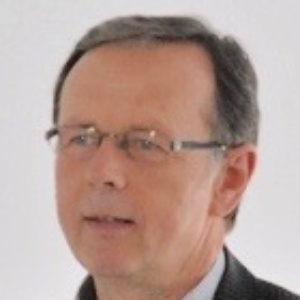
Algimantas Krisciukaitis
Lithuanian University of Health Sciences
Lithuania
|
Short Bio
Algimantas Krisciukaitis receiveid is Dipl. Eng. Electronics in 1980, and his Phd. Biophysics in 1989. A PostDoc in University of Stuttgart, Germany (between 1993-1996). Currently he is Professor at Dept. Physics, Mathematics, Biophysics, at the Lithuanian University of Health Sciences.
|
|
Katarina Trojachanec Dineva
Faculty of Computer Science and Engineering, Skopje
North Macedonia
|
Short Bio
Katarina Trojacanec started her studies at the Faculty of Electrical Engineering and Information Technologies, University "Ss. Cyrill and Methodius" in Skopje, Macedonia in 2004 at the Department of Computer Science and Engineering. She graduated at the same Faculty on June 2008. She defended her master thesis titled "Content Based Image Retrieval System for Magnetic Resonance Images" at the same Faculty in May 2010 under supervision of prof. d-r Suzana Loskovska. During her education at the Faculty of Electrical Engineering and Information Technologies in Skopje, she was continuously awarded for her successful s
tudying. As the best student in the generation she was awarded with an "Engineering ring" by the Engineering Institution of Macedonia and with "Gold Coin" by the University "Ss. Cyril and Methodius", Macedonia. She obtained her initial working experience at the Faculty for Computer Science, European University in Skopje in 2008. She started to work at the Faculty of Electrical Engineering and Information Technologies in October 2008. Her research is focused on medical imaging, image processing, content based image retrieval, data mining, machine learning, and software engineering.
... More >>